
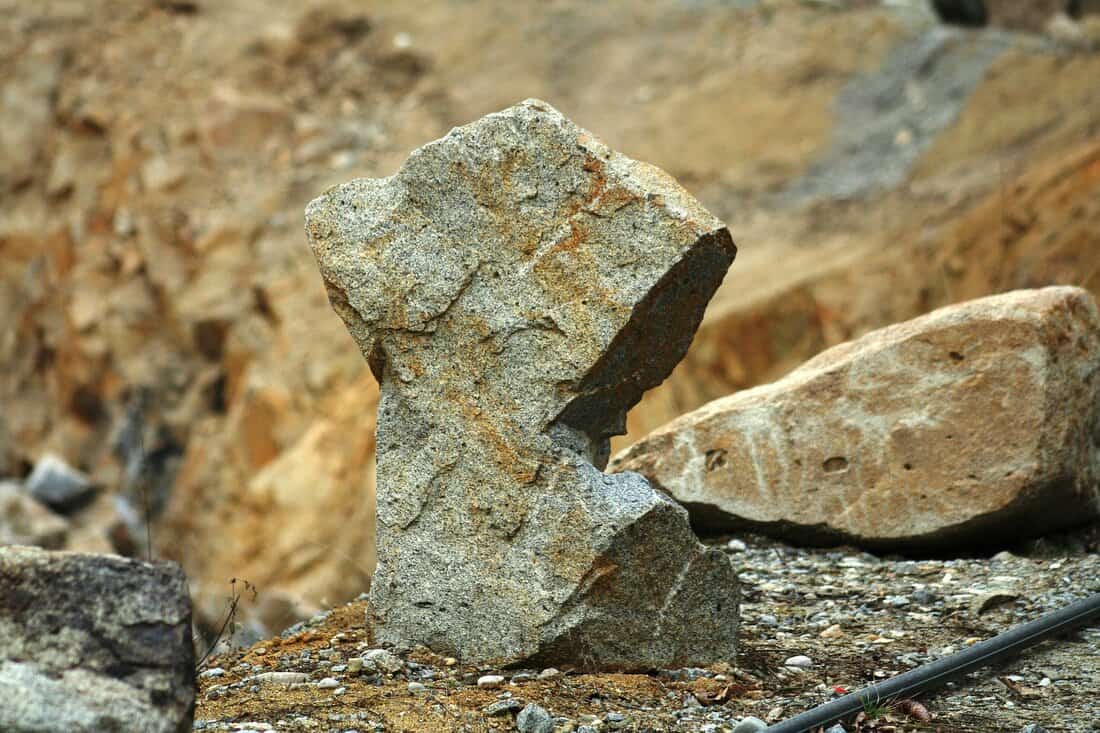
One of the most important and often underestimated considerations when specifying natural stone cladding is weight.
Architects, builders, engineers, and installers regularly ask:
“How heavy is stone cladding per square metre?”
The answer varies significantly depending on:
- stone type
- density
- thickness
- finish profile
- fixing method
- moisture absorption
- backing systems
At AUSSIETECTURE, we frequently work through these calculations during specification because stone weight directly influences:
- structural engineering
- substrate suitability
- installation methods
- mechanical fixing requirements
- transport logistics
- long-term safety and performance
And while many people focus heavily on appearance, understanding the physical weight of stone is absolutely critical.

Why Stone Weight Matters
Natural stone is a dense building material, unlike lightweight cladding products or manufactured veneers, genuine stone carries significant mass.
This affects:
- wall loading
- framing design
- adhesive selection
- fixing systems
- structural movement
- installation complexity
Incorrectly specifying heavy stone without considering substrate capability can lead to:
- fixing failures
- substrate movement
- cracking
- delamination
- structural risk
- long-term durability issues
Stone weight should never be treated as an afterthought.
The Basic Rule for Estimating Stone Weight
Most natural stone weighs approximately: 2,200kg to 2,700kg per cubic metre depending on the material.
This means the thicker the stone becomes, the heavier the cladding rapidly gets.
As a rough guide:
| Thickness | Approximate Weight |
| 10mm | 22–27kg/m² |
| 15mm | 33–40kg/m² |
| 20mm | 44–54kg/m² |
| 30mm | 66–81kg/m² |
| 40mm | 88–108kg/m² |
| 50mm | 110–135kg/m² |
These figures are general estimates only and vary depending on:
- sandstone
- limestone
- granite
- bluestone
- marble
- quartzite
- moisture content
- surface texture
Sandstone Cladding Weight
Australian sandstone commonly falls within: 2,200–2,400kg/m³
Typical sandstone cladding weights may include:
| Sandstone Thickness | Approximate Weight |
| 20mm | 44–48kg/m² |
| 30mm | 66–72kg/m² |
| 40mm | 88–96kg/m² |
However, heavily textured or irregular walling profiles may weigh substantially more due to increased material depth.
Irregular walling often creates beautiful architectural depth but can quickly push systems beyond:
- 100kg/m²
particularly with larger-format pieces.
Granite and Dense Stone Can Be Extremely Heavy
Granite, basalt, and dense bluestones are significantly heavier than many sandstones.
These materials may exceed 2,700kg/m³. As a result, even relatively thin granite cladding can become extremely heavy.
For example:
| Granite Thickness | Approximate Weight |
| 20mm | 54kg/m²+ |
| 30mm | 81kg/m²+ |
| 40mm | 108kg/m²+ |
This is why many dense stones often require:
- mechanical fixing systems
- engineered support structures
- advanced facade engineering
particularly on vertical applications.
Irregular Walling Often Weighs More Than People Expect
One of the most common misunderstandings in the industry is assuming irregular walling weighs the same as calibrated flat cladding.
It rarely does.
Natural irregular stone profiles often contain:
- varying depths
- thicker projections
- rough split backs
- inconsistent profiles

As a result, true installed weights can become substantially higher than nominal thickness calculations suggest. Some heavily profiled walling systems may exceed 120kg/m² or more. This is why proper engineering and fixing assessment becomes critical.
Lightweight Stone Veneer vs Full-Bodied Stone
Modern lightweight veneer systems have become increasingly popular because they reduce:
- structural loads
- installation complexity
- freight costs
Thin stone veneer systems may range between 20–50kg/m² depending on thickness.
By comparison, traditional full-bodied masonry stone can become several times heavier.
Both systems have their place.
However, architects should understand that reducing thickness also changes:
- visual depth
- edge definition
- shadowing
- textural authenticity
Heavier stone often creates richer architectural outcomes.
Weight Directly Influences Installation Methods
As cladding weight increases, installation systems become more complex.
Lightweight stone may sometimes be installed using:
- direct adhesive fixing
- lightweight substrates
- simplified systems
Heavier stone may require:
- mechanical fixing
- stainless restraints
- support angles
- cavity systems
- structural framing
- engineering certification
This becomes particularly important for:
- multi-storey facades
- public infrastructure
- coastal environments
- commercial projects
- high-wind regions
Australian Standards and engineering requirements should always be considered.
Substrate Suitability Is Critical
Not all substrates are suitable for heavy stone.
One of the most common specification mistakes is overlooking substrate limitations.
Questions architects and builders should always ask include:
- Can the substrate safely support the load?
- Will movement occur?
- Is waterproofing compatible?
- Does the fixing system allow drainage?
- Is mechanical restraint required?
- What is the long-term risk profile?
This is especially important when installing stone over:
- lightweight framing
- fibre cement sheeting
- waterproofed systems
- external facades
- older structures
Natural stone may appear static, but buildings constantly move.
Weight amplifies these challenges.
Heavier Stone Often Looks Better
While weight creates engineering considerations, heavier stone frequently produces more authentic architectural outcomes.
Thicker stone generally creates:
- stronger shadow lines
- deeper texture
- richer edge detail
- more natural irregularity
- greater visual permanence
This is particularly noticeable with:
- split-face stone
- rockfaced cladding
- irregular walling
- random ashlar layouts
Many luxury architectural projects intentionally embrace heavier stone because the finished result feels:
- more grounded
- more tactile
- less manufactured
- more timeless
Stone Weight Should Never Be Estimated Casually
One of the biggest mistakes in the industry is relying on assumptions rather than actual calculations.
Even small thickness increases dramatically affect overall loading.
For example:
- increasing stone from 20mm to 40mm can effectively double wall weight
Across large facades, this becomes a major structural consideration.
Proper specification should always involve:
- accurate stone density data
- realistic installed thicknesses
- engineering consultation
- fixing system review
- substrate assessment

Natural Stone Is Meant to Carry Presence
One of the reasons natural stone feels timeless is because it carries:
- mass
- depth
- permanence
- solidity
Its weight is part of its architectural character.
Good stone design is not about making stone as light as possible.
It is about understanding how to responsibly integrate that weight into architecture while preserving the authenticity that makes natural stone so desirable in the first place.
OUR RANGE →


