
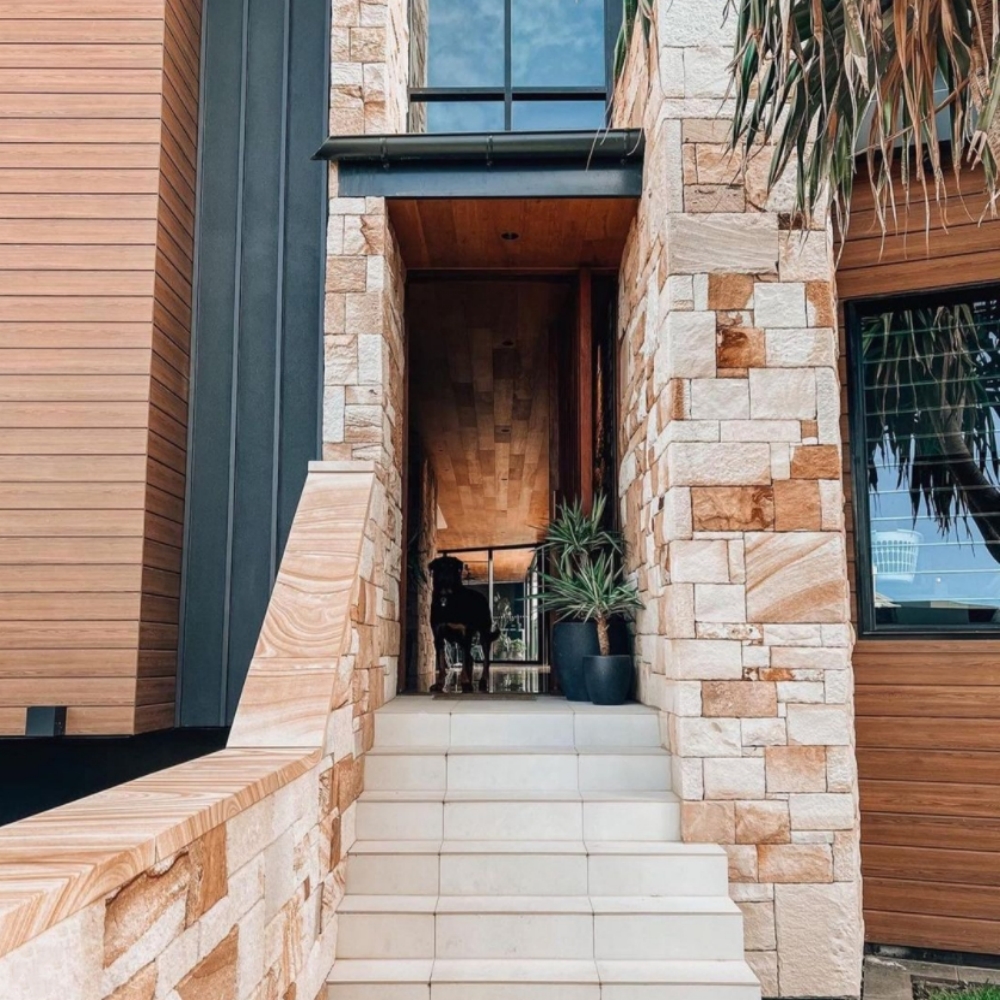
Australian Mechanical Fixing Standards for Stone Cladding: Why They Matter
When it comes to installing stone cladding—especially in commercial and high-rise applications—adhesive alone isn’t always enough. For projects where safety, longevity, and compliance are critical, mechanical fixing systems are required by Australian standards.
Whether you’re working with sandstone, granite, marble, or limestone, understanding these standards isn’t just good practice—it’s the law.
1. What is Mechanical Fixing?

Mechanical fixing involves physically anchoring stone panels to the building structure using stainless steel pins, brackets, kerf fixings, or other engineered hardware. This system works in conjunction with adhesives (or sometimes on its own) to hold the stone in place.
It’s especially important for:
- High-rise façades
- Large-format stone panels
- Overhead installations
- Areas with high wind or seismic loads
2. The Australian Standards That Apply
In Australia, mechanical fixing of stone cladding is guided by AS 4214 – Fixing of Stone Veneer and related building codes such as the NCC (National Construction Code). These documents set out requirements for:
- Design Loads: Ensuring the fixing system can withstand wind, thermal movement, and seismic activity.
- Material Selection: Using corrosion-resistant components (typically 316-grade stainless steel).
- Anchoring Methods: Approved techniques such as undercut anchors, kerf slots, or bracket systems.
- Spacing & Support: Specified maximum panel sizes and fixing points to prevent bowing or detachment.
- Testing & Certification: Proof that the fixing system meets engineering and safety requirements.
3. Why These Standards Exist
Natural stone is heavy—and once installed vertically, gravity is always working against it. Without proper mechanical fixings, there’s a real risk of panels detaching, which could lead to property damage, injury, or even fatalities.
These standards:
- Protect Public Safety
- Prevent Structural Failures
- Ensure Long-Term Performance
- Maintain Building Compliance
4. Adhesive Alone Isn’t Always Enough
While high-quality adhesives can be extremely strong, they are not designed to carry the full load in certain situations—particularly in external or high-load environments. Mechanical fixings provide redundancy, meaning even if adhesive fails, the stone stays in place.
5. Best Practice for Compliance
To meet Australian mechanical fixing standards, you should:
- Engage an Engineer: Have the fixing system designed and certified for your specific project.
- Use Tested Systems: Choose a fixing method that has undergone Australian or international load testing.
- Select the Right Materials: Always use corrosion-resistant stainless steel in exterior environments.
- Follow Manufacturer Instructions: Every fixing system has installation tolerances that must be adhered to.
- Document Everything: Keep records for council or compliance inspections.
6. AUSSIETECTURE’s Approach
At AUSSIETECTURE, we don’t cut corners when it comes to safety. For any project requiring mechanical fixing, we work closely with engineers and suppliers to ensure the system meets AS 4214 and NCC requirements.
We can also advise on combined adhesive and mechanical fixing methods, giving you both a beautiful and structurally sound result that will stand the test of time.
✅ Final Tip:
If you’re planning a stone cladding project—especially on a multi-storey building—mechanical fixing isn’t just an option, it’s often a mandatory legal requirement. Speak with your supplier and installer early to ensure your project is designed, tested, and certified to Australian standards.
Choices Made Easy – Aussietecture
Stone and Cladding Options


