

Are Cobblestones Suitable for Vehicle Traffic?
Yes — cobblestones can absolutely be suitable for vehicle traffic.
In fact, cobblestones have been used for centuries on:
- roads,
- laneways,
- courtyards,
- carriageways,
- public streets,
- and heavy-use civic environments.
But not all cobblestones are created equal.
Whether cobblestones are suitable for vehicle traffic depends heavily on:
- stone type,
- thickness,
- installation method,
- substrate preparation,
- jointing system,
- and the type of traffic they will carry.

At AUSSIETECTURE, this is one of the most common questions we receive from architects, landscapers, and homeowners designing driveways and external spaces.
Because while cobblestones can be incredibly durable, poor specification or installation can quickly lead to movement and failure.
Cobblestones Have Been Used for Hundreds of Years
One of the reasons cobblestones remain popular today is because their performance has already been proven over centuries.
Traditional European cities still contain cobblestone streets carrying:
- vehicles,
- buses,
- pedestrians,
- and service traffic
decades — and sometimes centuries — after installation.
This longevity is one of the reasons cobblestones continue to appeal in contemporary architecture.
They feel:
- permanent,
- timeless,
- and architecturally grounded.
Thickness Matters Enormously
One of the most important factors for vehicle applications is: cobblestone thickness.
20mm cobblestones may be suitable for:
- pathways,
- courtyards,
- and pedestrian zones.
But vehicle traffic places far greater structural stress on paving systems.
For driveways and trafficable areas, 30mm + thicker cobblestones generally perform far better because they provide:
- greater strength,
- improved load distribution,
- and better long-term durability.
At AUSSIETECTURE, we often recommend thicker cobblestone profiles for vehicle applications — particularly where long-term performance is important. You will not find 20mm cobblestones at Aussietecture.
The Substrate Is Just as Important as the Stone
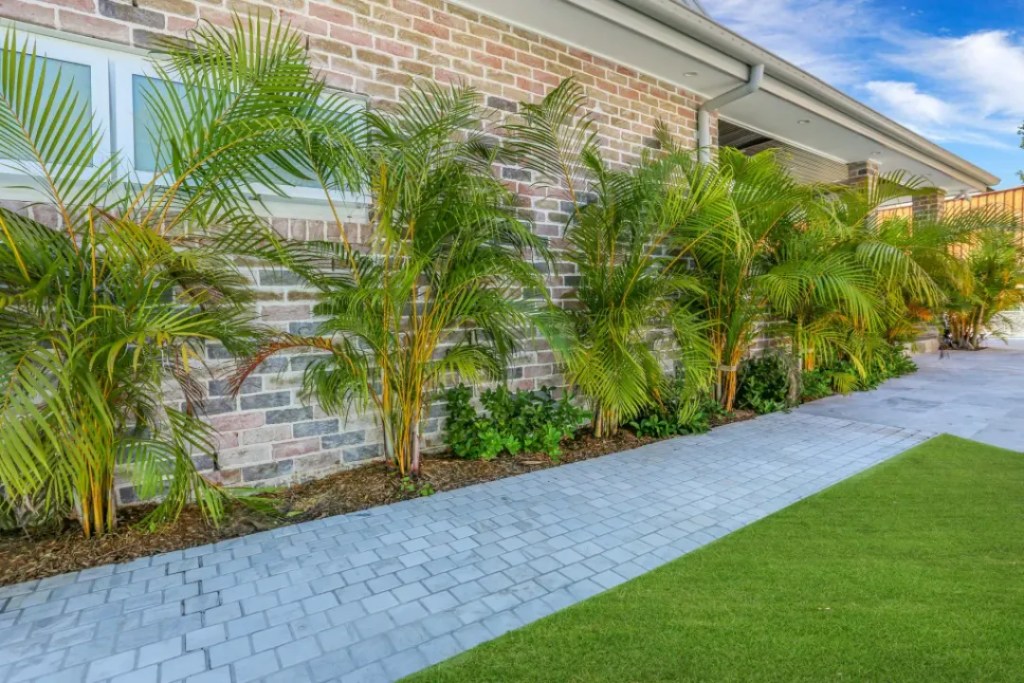
One of the biggest misconceptions is that cobblestone performance is determined only by the stone itself.
In reality:
the substrate is critical.
Even premium cobblestones can fail if installed over poorly prepared foundations.
Vehicle traffic requires properly engineered support systems including:
- adequate excavation,
- concrete base
- drainage,
- bedding preparation,
- and movement control.
Most cobblestone failures occur because the ground beneath the stone moves or settles.
Different Traffic Types Require Different Systems
Not all vehicle traffic is equal.
A residential driveway experiences very different loading compared to:
- commercial traffic,
- delivery vehicles,
- trucks,
- or public roads.
Factors that influence design include:
- vehicle weight,
- turning movements,
- traffic frequency,
- braking pressure,
- and slope.
Heavier applications may require:
- thicker stone,
- reinforced bases,
- mortar-set systems,
- or engineered pavement design.
Stone Type Matters
Some natural stones are more suitable for trafficable paving than others.
Dense stones with high compressive strength generally perform better under vehicle loads.
Common trafficable cobblestone materials may include:
- granite,
- bluestone,
- dense sandstone,
- and certain hard limestones.
The geological characteristics of the stone influence:
- strength,
- wear resistance,
- water absorption,
- and long-term durability.
Jointing Is Extremely Important
Cobblestone systems rely heavily on proper jointing.
The joints help:
- distribute loads,
- manage movement,
- and maintain paving stability.
Poorly jointed cobblestones may begin to:
- loosen,
- shift,
- rock,
- or separate over time.
Joint width and filling methods should always suit:
- stone sizing,
- traffic conditions,
- and installation type.
Flexible vs Mortared Systems
Cobblestones can be installed using:
- flexible systems,
or - rigid mortar-set systems.
Each has advantages depending on the project.
Flexible systems often allow slight movement and can suit:
- residential driveways,
- pathways,
- and traditional paving styles.
Mortared systems may be more suitable for:
- steeper driveways,
- heavier traffic,
- or highly controlled architectural applications.
The correct system depends on engineering and site conditions.
Cobblestones Create Architectural Character
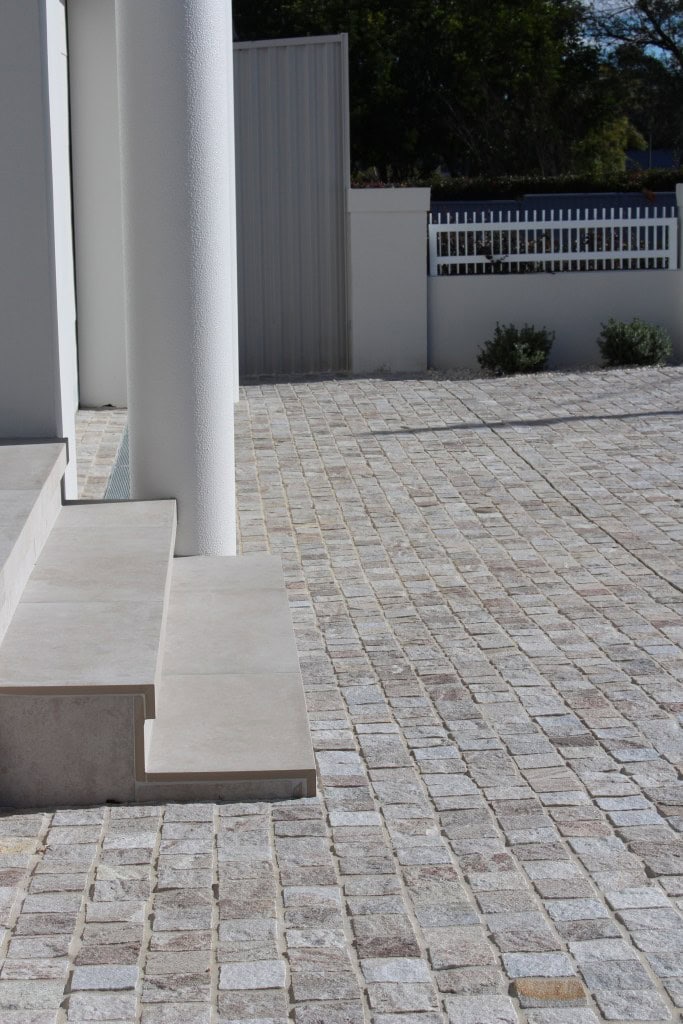
Beyond durability, cobblestones remain popular because they create:
- texture,
- movement,
- shadow,
- and timeless architectural appeal.
Unlike large flat paving systems, cobblestones introduce:
- rhythm,
- scale,
- and natural variation.
This is why they are increasingly being used in:
- luxury driveways,
- courtyard spaces,
- entry statements,
- landscape architecture,
- and contemporary homes seeking more tactile materials.
Vehicle Comfort Should Also Be Considered
While cobblestones are durable, heavily textured or uneven profiles may create:
- vibration,
- tyre noise,
- or rough driving surfaces.
This is why profile selection matters.
More refined cobblestone formats can still provide:
- texture,
- visual depth,
- and authenticity
while maintaining greater vehicle comfort.
Drainage Is Critical
Water is one of the biggest threats to trafficable paving systems.
Poor drainage can contribute to:
- base movement,
- erosion,
- settlement,
- and long-term instability.
All vehicle-rated cobblestone systems should properly manage:
- runoff,
- groundwater,
- and moisture movement.


Cobblestones Can Last Generations When Installed Correctly
At AUSSIETECTURE, we believe cobblestones remain one of the most timeless and durable paving materials available.
But successful vehicle applications require more than simply choosing a beautiful stone.
They require:
- correct thickness,
- proper stone selection,
- engineered substrates,
- suitable jointing,
- and skilled installation.
When designed correctly, cobblestones can comfortably handle vehicle traffic while delivering architectural character that few modern paving materials can replicate.
Because some of the world’s oldest roads are proof that natural stone, when installed properly, is built to endure.
We would love to see you visit our stores.
Unit 25-26 / 85-115 Alfred Rd, Chipping Norton NSW 2170
5/7 Byres St, Newstead QLD 4006
Lot 92 Seventeen Mile Rd, Helidon QLD 4344
hi@aussietecture.com.au
Related Products

FLAMED

SPLIT

TUMBLED

TUMBLED