

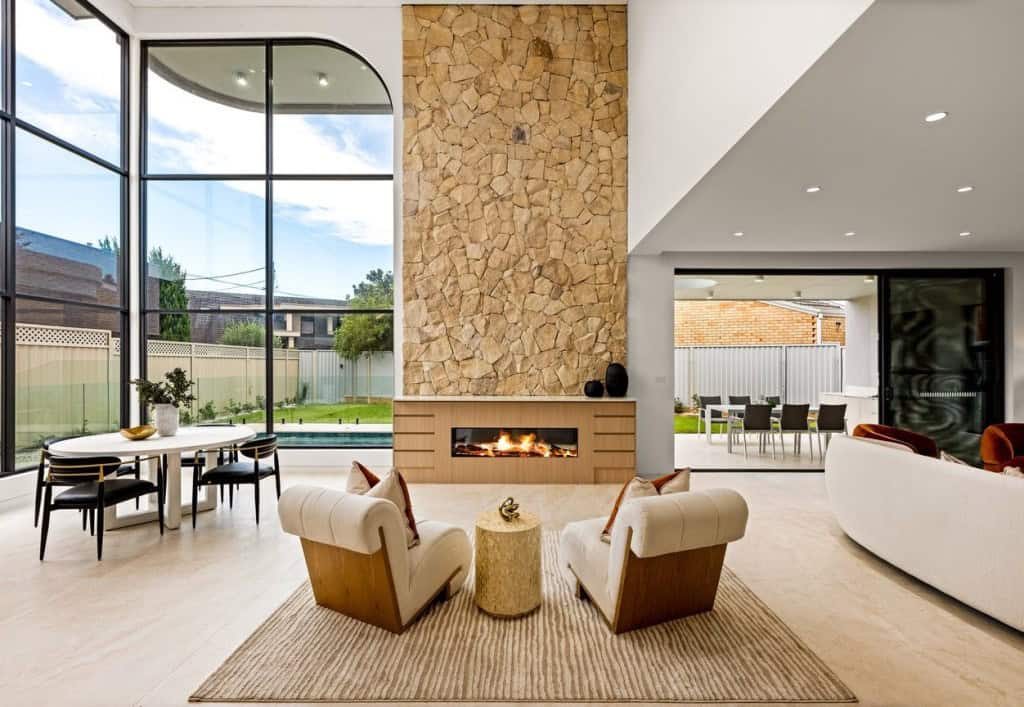
One of the most important things architects, builders, and homeowners must understand about natural stone is this:
Natural stone is not a manufactured product.
It is a geological material formed over thousands — sometimes millions — of years.
And that means variation is not a defect.
It is part of the product itself.
At AUSSIETECTURE, we regularly help clients understand the difference between:
- natural variation,
- acceptable tolerances,
- and actual quality issues.
Because many installation problems, disputes, and unrealistic expectations begin when people expect natural stone to behave like porcelain tiles or factory-made panels.
What Are Stone Tolerances?
Stone tolerances refer to the acceptable level of variation within natural stone products.
These variations may occur in:
- thickness,
- sizing,
- colour,
- texture,
- surface finish,
- edge detail,
- and natural markings.
Unlike fully manufactured materials, natural stone cannot be produced with absolute perfection or complete uniformity.
Even with advanced processing equipment, every piece of stone still contains natural geological variation.

Natural Variation Is Part of the Beauty
One of the reasons architects choose natural stone is precisely because it contains:
- movement,
- texture,
- tonal shifts,
- layering,
- fossils,
- mineral markings,
- and unique surface characteristics.
No two pieces are ever identical.
This variation helps create:
- warmth,
- authenticity,
- depth,
- and timeless architectural character.
If every piece looked exactly the same, the result would often feel artificial.
Stone Is Not Porcelain
This is one of the biggest misconceptions in the industry.
Porcelain tiles are highly controlled manufactured products.
Natural stone is quarried from the earth.
That means some level of variation is completely normal.
Attempting to expect:
- perfect sizing,
- identical colouring,
- or flawless repetition
often leads to unrealistic expectations.
Stone should be appreciated for its natural character — not judged by manufactured standards.
Common Variations in Natural Stone
Thickness Variation
Natural stone can vary slightly in thickness depending on:
- stone type,
- processing method,
- split-face texture,
- and finish style.
This is particularly common with:
- irregular walling,
- split-face cladding,
- tumbled products,
- and hand-finished stone.
Experienced installers account for these tolerances during installation.
Colour Variation
Colour variation is entirely normal in natural stone.
Factors influencing colour include:
- mineral composition,
- quarry layers,
- geological conditions,
- weathering,
- and extraction areas.
Even stone from the same quarry can vary slightly between batches.
This is why proper blending during installation is essential.
Texture Variation
Stone surfaces naturally contain:
- pits,
- veins,
- fossils,
- grain movement,
- clefts,
- and layered textures.
These characteristics are not faults.
They are often what give natural stone its richness and authenticity.
Size Variation
Some stone products — particularly irregular formats — intentionally contain size variation.
This helps create:
- more organic layouts,
- natural movement,
- and traditional architectural character.
Random lengths and irregular profiles are specifically designed to avoid repetitive appearance.
Understanding the Difference Between Variation and Defects
Not all variation is a problem. But there is an important difference between: natural variation and poor quality control.
Natural variation may include:
- tonal movement,
- textural shifts,
- fossils,
- slight sizing differences,
- and natural markings.
Actual quality issues may include:
- cracked stone,
- structural weakness,
- excessive warping,
- poor backing surfaces,
- or damaged pieces.
Understanding this distinction is critical.
Why Stone Samples Can Be Misleading
A small sample can never fully represent an entire stone project.
Natural stone should be viewed across:
- full batches,
- larger areas,
- and complete installations.
Many clients mistakenly expect every piece to match a tiny sample exactly.
In reality, variation across a full project often creates the most beautiful architectural outcomes.
This is why experienced stone suppliers focus heavily on:
- quarry selection,
- grading,
- blending,
- and batch consistency.

Blending Is Essential During Installation
One of the biggest installation mistakes is failing to properly blend stone from multiple pallets or crates.
Without blending, projects can develop:
- patchiness,
- colour clustering,
- abrupt tonal shifts,
- or inconsistent appearance.
Stone should always be installed by drawing material from multiple crates simultaneously to create balanced natural variation across the project.
Good installation matters just as much as good stone.
Tight Tolerances Often Increase Costs
The tighter the requested tolerances, the more processing, sorting, cutting, and wastage is usually involved.
Highly calibrated stone products may require:
- additional machining,
- increased labour,
- stricter grading,
- and higher rejection rates.
This often increases cost significantly.
Many architects intentionally embrace natural variation because it creates:
- more authentic spaces,
- softer architectural character,
- and greater visual richness.
Contemporary Architecture Is Returning to Natural Materials
Modern architecture is increasingly moving away from:
- overly sterile finishes,
- artificial perfection,
- and repetitive manufactured materials.
Instead, architects are embracing:
- texture,
- authenticity,
- craftsmanship,
- and organic variation.
Natural stone sits at the centre of this movement. Its imperfections are often what make it beautiful.
Stone Should Feel Natural — Not Artificial

At AUSSIETURE, we believe understanding stone tolerances is essential to achieving successful architectural outcomes.
Because natural stone is not supposed to look machine-made.
It is supposed to feel:
- authentic,
- substantial,
- timeless,
- and connected to nature.
And often, the very variations people initially question become the qualities they end up loving the most.
We would love to see you visit our stores.
Unit 25-26 / 85-115 Alfred Rd, Chipping Norton NSW 2170
5/7 Byres St, Newstead QLD 4006
Lot 92 Seventeen Mile Rd, Helidon QLD 4344
hi@aussietecture.com.au